Coming back from a “down” moment is a struggle for many people. It doesn’t matter if they’re 15 or 50. Whether it’s getting ghosted by someone or bombing a midterm they actually studied for, that “sinking feeling” is universal. Most people, even adults, see a losing situation and fold.
However, stepping into the Brighton High School wrestling room after the final bell rings presents a different story: teenagers who don’t just “deal” with pressure but thrive on it. This year, that grit carried the entire wrestling program to the state semifinals, with ten individual wrestlers earning a spot in the MHSAA Wrestling Individual State Finals. Senior Alexis Lazar capped off a perfect 27-0 record with a state championship in the 140-pound class, while sophomore Dominic Nauss was second in 190 and seniors Ethan Smith and Xander Courneya placed third in their respective classes.
The Psychology of the Pin
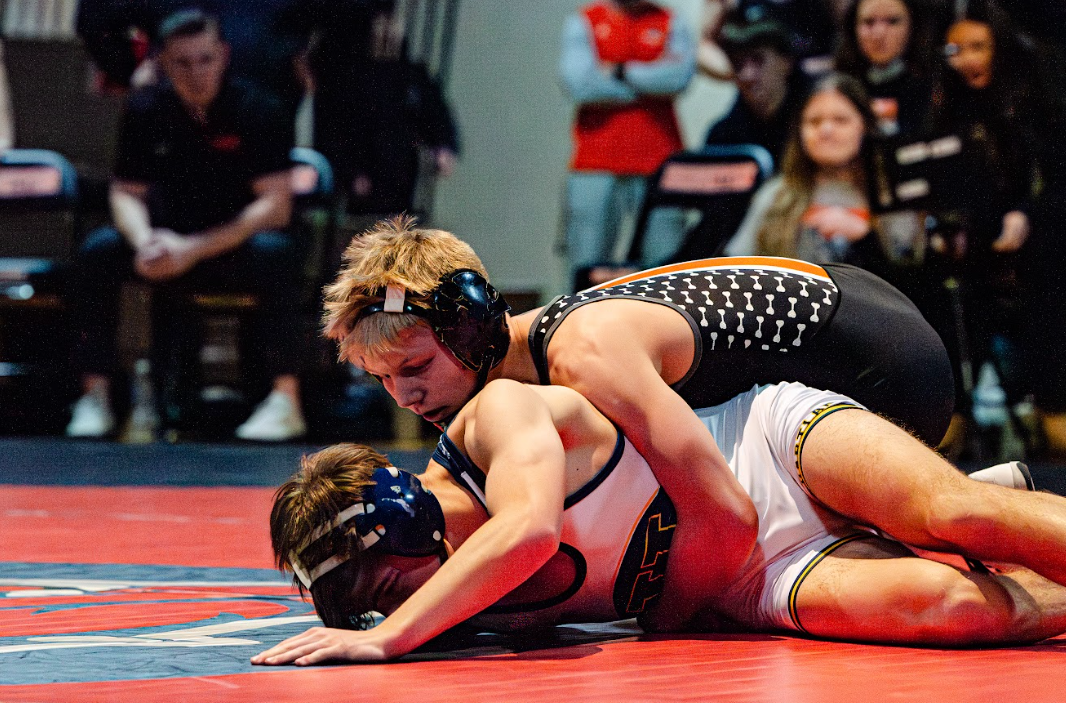
Wrestling is a 50-50 split between raw physicality and total mental composure. It’s about staying ice-cold when an opponent is trying to crush your ribs. Success requires the ability to remain calm under a literal ton of pressure. When the lights are bright and the clock is ticking, senior Ethan Smith stays patient.
“When I’m down in a match and can’t move, I do my best to calm down and use my positioning to turn the kid and put him on his back,” Smith, who took third in 132, said.
Mr. Matthew Wisniewski, one of the team’s coaches, also emphasized the importance of remaining calm and focused, even when pinned down.
“At the semifinal and state level, it comes down to trusting your basics and staying composed in the moment,” Wisniewski said. “When a wrestler finds themselves in a tough position, the focus is on doing the simple things right—good positioning, winning each position and smart decisions—rather than trying to force something big.”
Reclaiming Control
While takedowns are the standard way to stack points, there is a unique satisfaction in reclaiming control from the bottom. For senior Emme DeLisle, a reversal is a statement.
“A reversal can definitely feel better than a takedown,” DeLisle said, “especially if it’s at the end of the match and you really need those final few points.”
But the drive to reverse a bad situation doesn’t just come from individual pride. Wisniewski said that the team’s historic success is rooted in a larger purpose.
“They’re also competing for something bigger than themselves—their team and the people who’ve supported them all season,” he said. “Having wrestled a tough schedule in high-pressure matches all year prepares them for these moments. Instead of panicking, they rely on what they’ve trained and compete with confidence.”