
























“No person in the United States shall, on the basis of sex, be excluded from participation in, be denied the benefits of, or be subjected to discrimination under any educational program or activity receiving federal financial assistance.”
While not all may recognize these words right away, they have played a significant role in defining many students’ educational success, particularly female athletes. Title IX, a federal civil rights law passed in 1972, celebrated its 50th anniversary the year that the class of 2026 entered high school.
Since Title IX was implemented, there has been immense expansion in women’s sports, but some of it has gone under the radar. Thanks in part to the law, women’s flag football, field hockey and hockey have been a few of the sports that have made major strides in becoming one step closer to being recognized by the Michigan High School Athletic Association as official varsity sports.
Brighton High School senior Emma Adamczyk has had a remarkable story that has followed the growth of girl’s flag football. Growing up, Adamczyk played club soccer, basketball and flag football.
“I thought soccer was my passion that I was going to play in college and all of that, but flag football is what I really enjoyed. I loved playing football, but there was just never an opportunity for girls,” Adamczyk said.
This all changed when Brighton High School made flag football a club sport beginning in the spring of 2024. Since then, Adamczyk has dedicated her time and effort to becoming the best quarterback she can. This has already paid off by her leading BHS’s team to Michigan’s first ever women’s flag football state championship game in 2025. Her success throughout the season drove her to start reaching out to college teams. With the sport being relatively new, there weren’t many options for Adamczyk, but she recently committed to play at Saginaw Valley State University on a half-ride scholarship for the upcoming season.
“I ultimately just want to encourage girls to not be scared to play flag football and that football isn’t just a male sport. Females can play it as well, so that’s what I hope to influence in the next generation,” Adamczyk said.
Although it isn’t an official varsity sport recognized by the MHSAA yet, women’s flag football is sanctioned as a varsity sport across 21 states and Washington, D.C. Adamczyk and her teammates have set the standard for competition in the state of Michigan, and the growing number of teams across the state—now reaching 80—could lead to official recognition on the statewide level in coming years. This is looking promising considering the growth of flag football at Division 1 postsecondary institutions across the state, such as at Eastern Michigan University, which is making women’s flag football a varsity sport beginning in spring 2027.
Senior Morgan Christopher experienced a similar journey to Adamczyk but with hockey. Christopher first learned to skate on a Mini Mites team when she was young and fell in love with it. However, she found herself in the minority when it came to the gender makeup.
“It was basically all boys and then the occasional one other girl. I had to get changed in a separate locker room and stuff,” Christopher said.
This is a common experience for girls who had to compete on male teams growing up due to the lack of opportunities for girls. However, at 10 years old, Christopher was able to transition to an all-girls team—the Kensington Valley Ravens. Continuing to play throughout middle school and high school, she is now committed to Adrian College to play hockey next year on its Division 1 ACHA (American Collegiate Hockey Association) team. However, since there was no official high school team for Christopher to compete on, she had to make her dream come true on a travel team rather than being able to represent her school, presenting extra barriers that many male athletes don’t have to face.
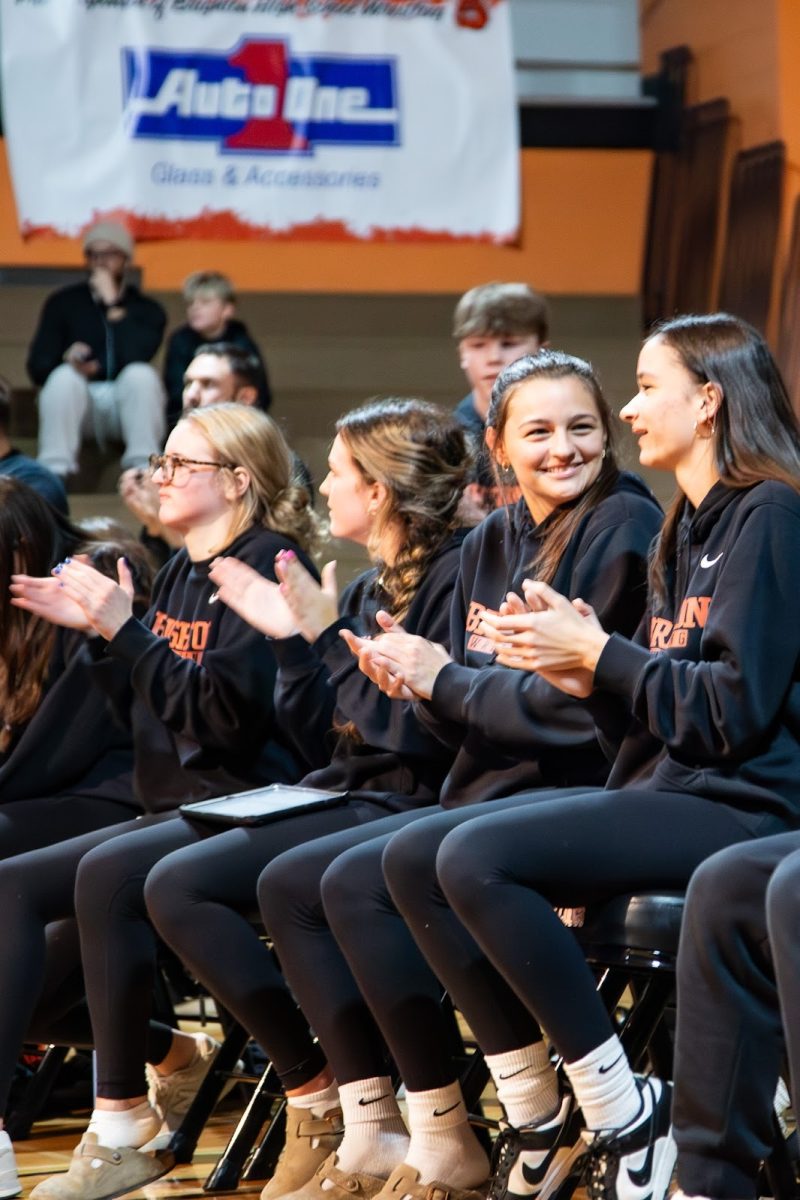
Despite the challenges that remain, though, women’s sports have made great progress since Title IX was first implemented. Although there have been some rough patches throughout the years, overall society has held true to uplifting women’s sports and supporting the growth of it, especially in sports with less popularity. For instance, BHS’s women’s flag football team is sponsored by the Detroit Lions, and all across the United States, the National Football League (NFL) is sponsoring women’s flag football teams.
BHS has also made efforts to expand opportunities for female athletes, such as by giving girls an opportunity to play on school teams, like field hockey, years before they have been officially recognized by the MHSAA.
“I think you need to be cognizant of that [Title IX] as an athletic administrator, whether you’re at Brighton or anywhere else, in terms of your decisions that you make and adding programs, facilities, decisions, any of those types of things,” Mr. John Thompson, BHS’s athletic director, said.
While upholding the value of women’s sports in Brighton, Thompson is also focused on the overall success of Brighton athletics.
“I’m certainly proud of what we’ve accomplished here, and I think the record speaks for itself. That’s a credit to our student athletes and our coaches and our community,” Thompson said.
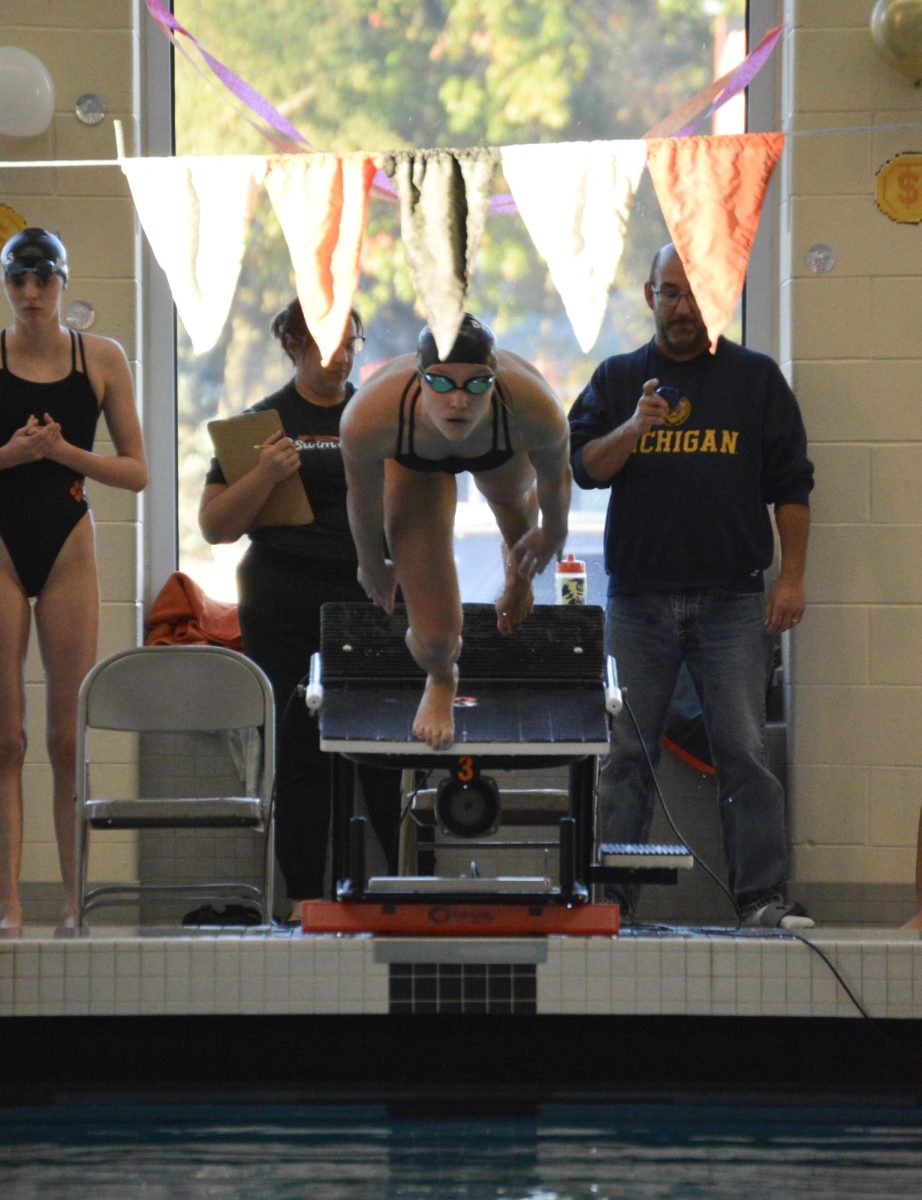
BHS has continued to establish its athletic excellence over the past few years, and women have been at the forefront of this. The women’s lacrosse team won back-to-back-to-back state titles during the 2022, 2023 and 2024 seasons, women’s volleyball won the KLAA West district championship in 2025 and the women’s flag football team was the runner-up in the 2025 state championship game, among other athletic victories. The addition of women’s flag football in the spring of 2023 and the sanctioning of women’s field hockey as an official varsity sport in 2025 reveal BHS’s dedication to continuing to expand these athletic opportunities for women.
However, that’s not to say that women don’t continue to face challenges in athletics. Despite the progress that Title IX has encouraged, girls and female student athletes continue to receive fewer athletic opportunities, and at the professional level, the disparities are even more distinct. As English professional soccer player Lucy Bronze once said, though, “It’s a right of passage for all women to make sure that the next generation is in a better place than you,” and through their progress, this is what Adamczyk and Christopher are doing—setting the foundation for women’s success in male-dominated sports and eroding at the stigmatism towards women competing in them.